We planned our India Adventure to try to live an everyday life in India and to immerse ourselves in the culture. Because Cadi and Alex have been attending a local school, they have had a much more immersive experience than Meg or myself!
So, what’s school like in India and how is it different or the same as in the U.S.? Well, this is a good place for a disclaimer since we’ve had experience with only ONE particular school here although the features that stand out there may in fact be quite common in many other Indian schools.
Here is what the girls told me about how their school is the same or different than the schooling they have experienced in the U.S.
Cadi: The teachers here are much more direct about what they want you to do and not do. One thing that is the same is that you still get homework. We have a dance class in school here and I wish we had a dance class in the U.S.
Alex: The teachers are much much more strict. One thing that is the same is that we have a lot of the same subjects as we do in America. I wish I could take Hindi classes in my school at home.

Alex in her regular school uniform and Cadi in her school team uniform. The photo was taken outside our apartment building.The gallery of photos below are from Pawar Public School, a private school that was established for the children of Nanded City, the residential community of 55,000 people where we live in Pune, India. It is a Pre-K to 10th grade school with over 2600 students. The school and its principal, Dr. Anjali Gurjar, have been AMAZINGLY welcoming and adaptable to us and needs. They have embraced our participation and have had Meg and myself into school many times to attend school functions and give presentations to students and teachers alike.
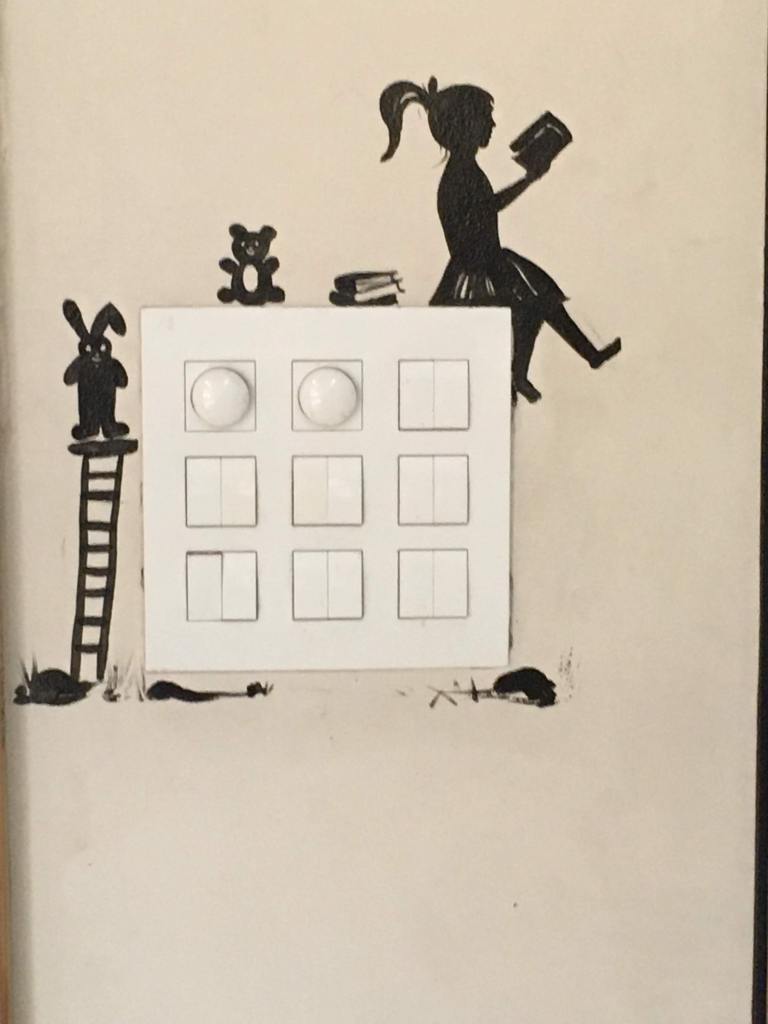
An example of whimsical art decorating an electrical switch at school. 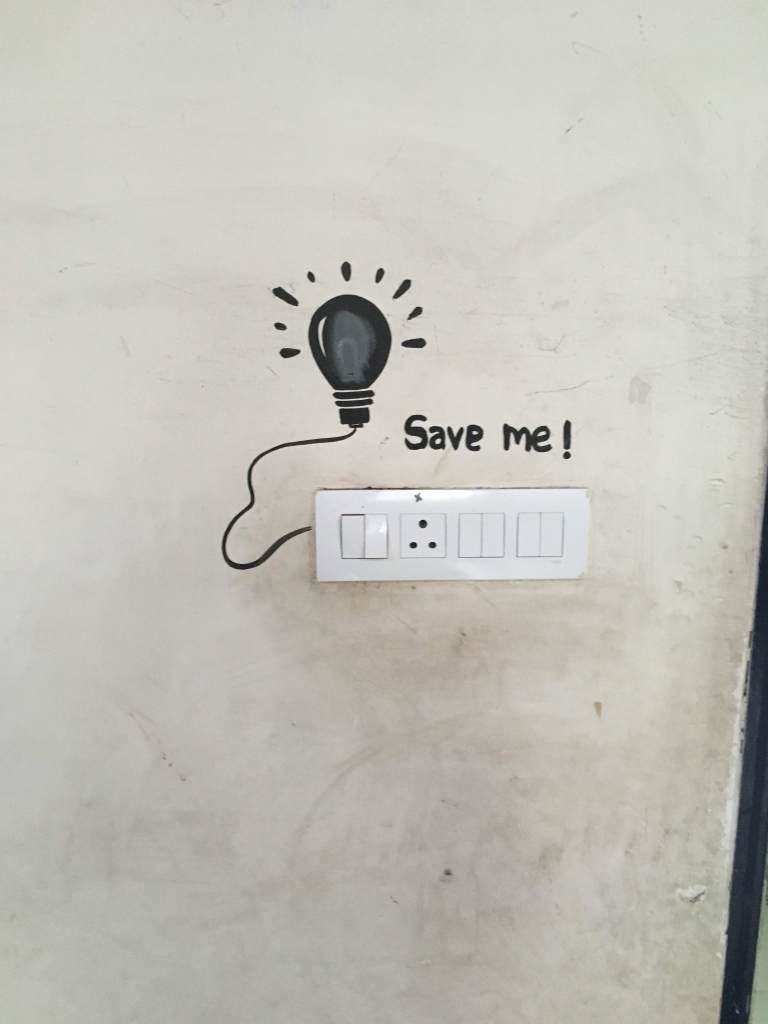
Another whimsical but pointed message about conservation painted on the walls. 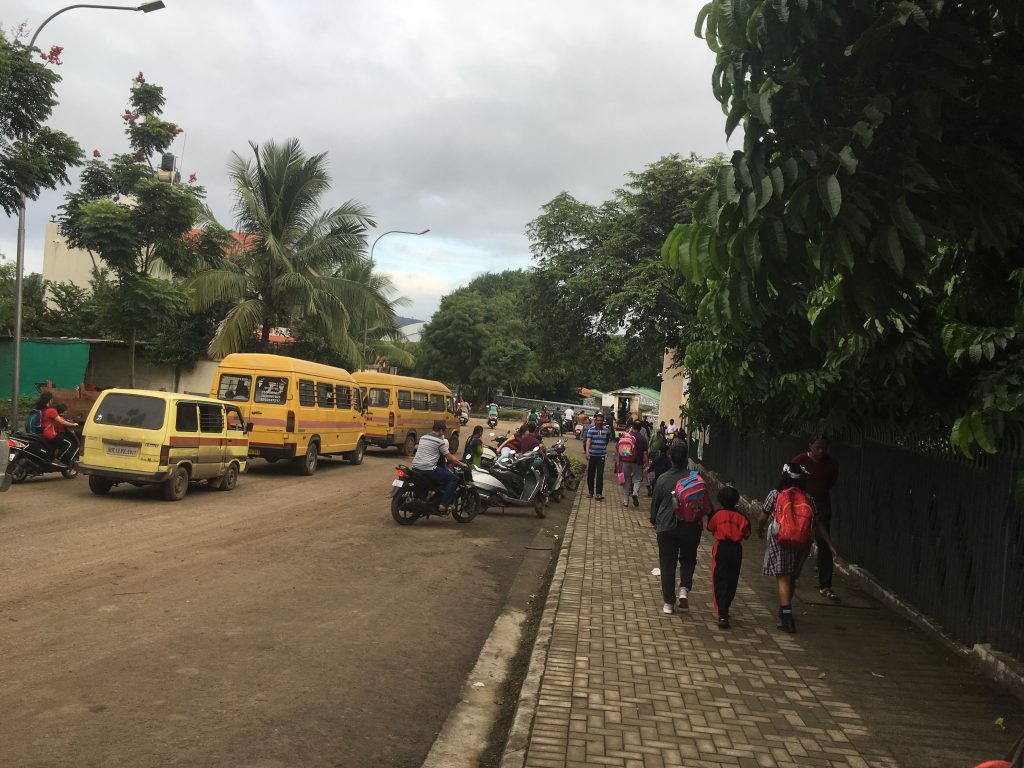
The scene at pick-up right after school. 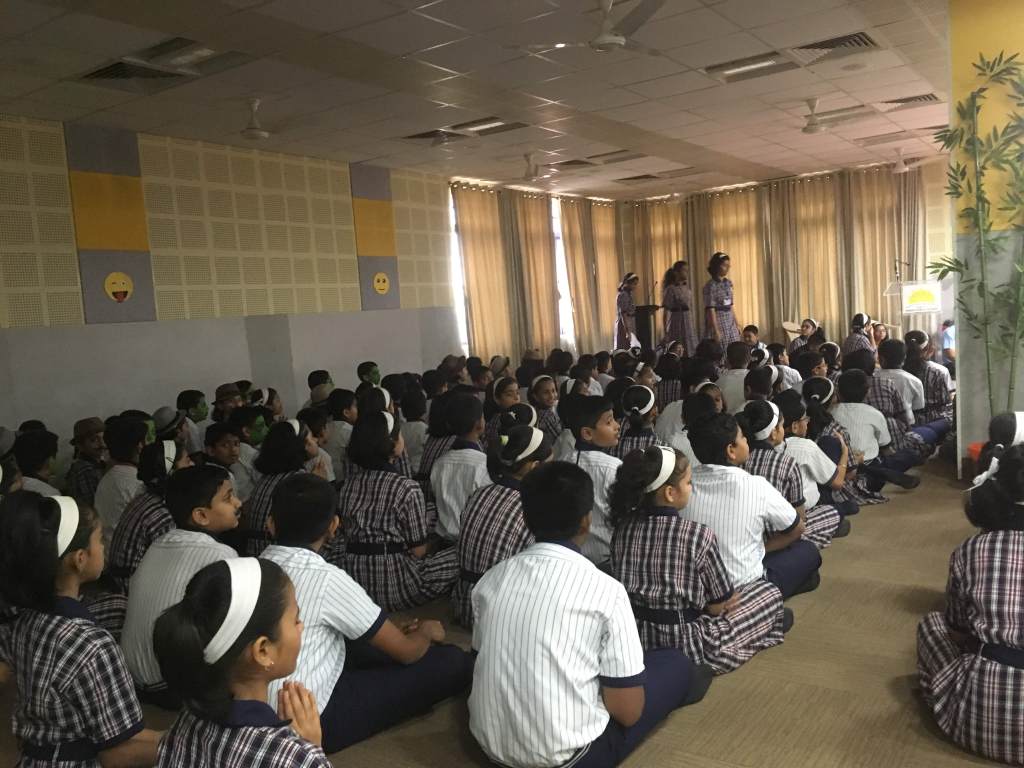
Students attending a presentation in school. 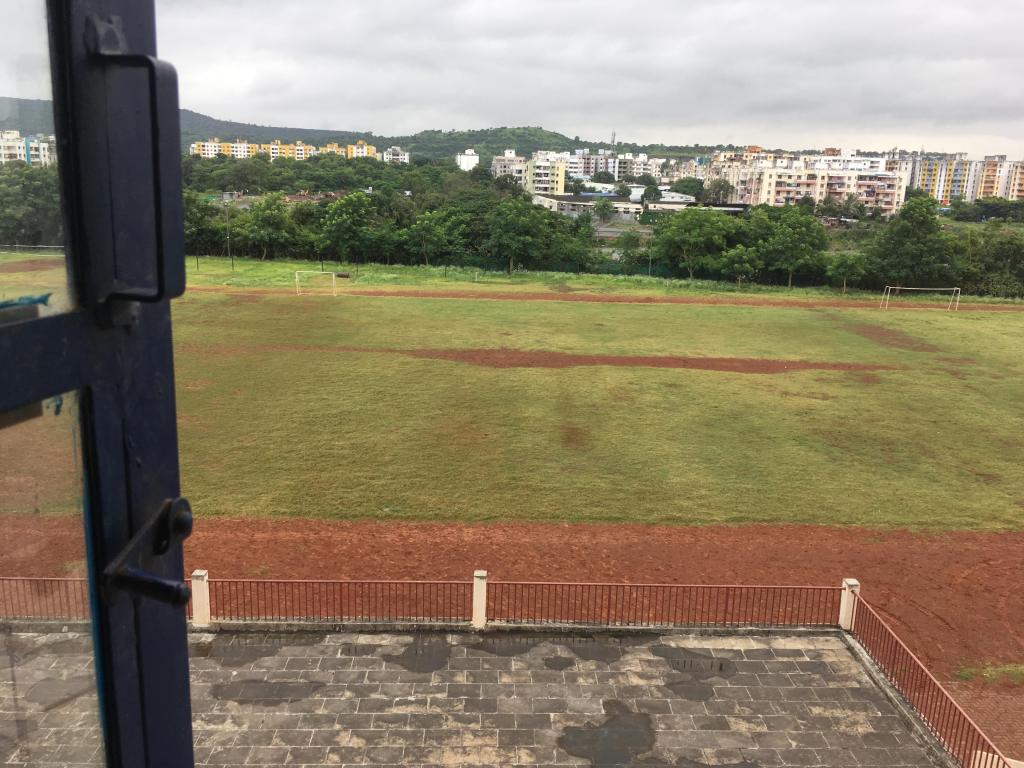
The athletic field behind the school 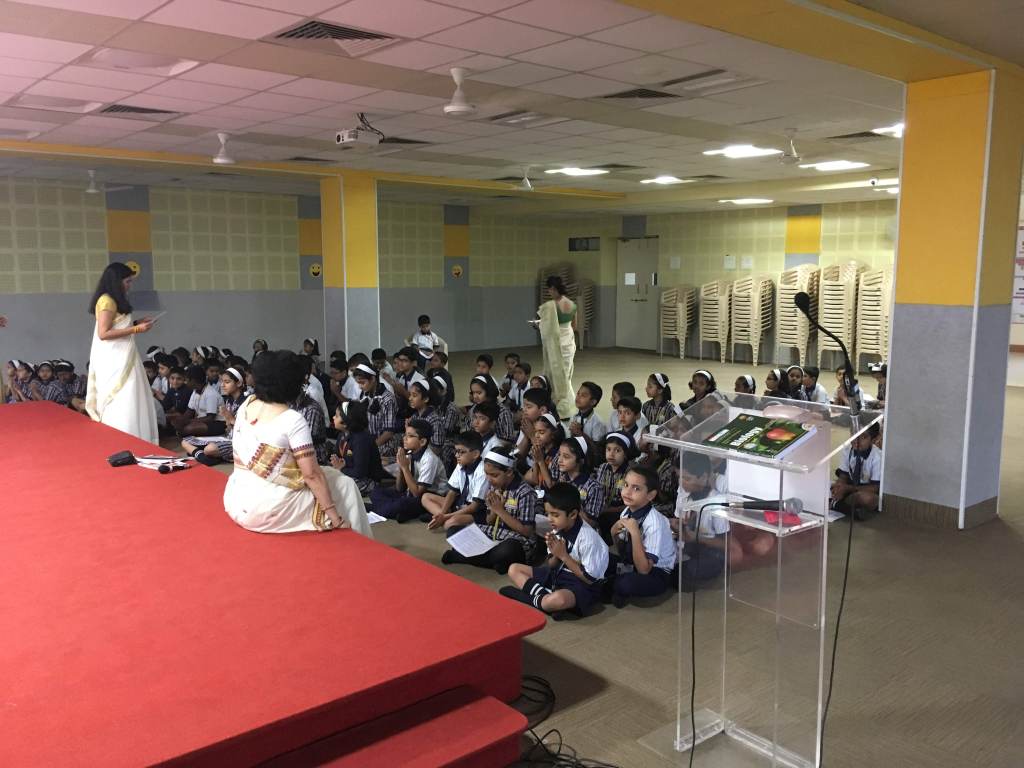
Students reciting hymns from the Hindu text, “The Bhagavad Gita” 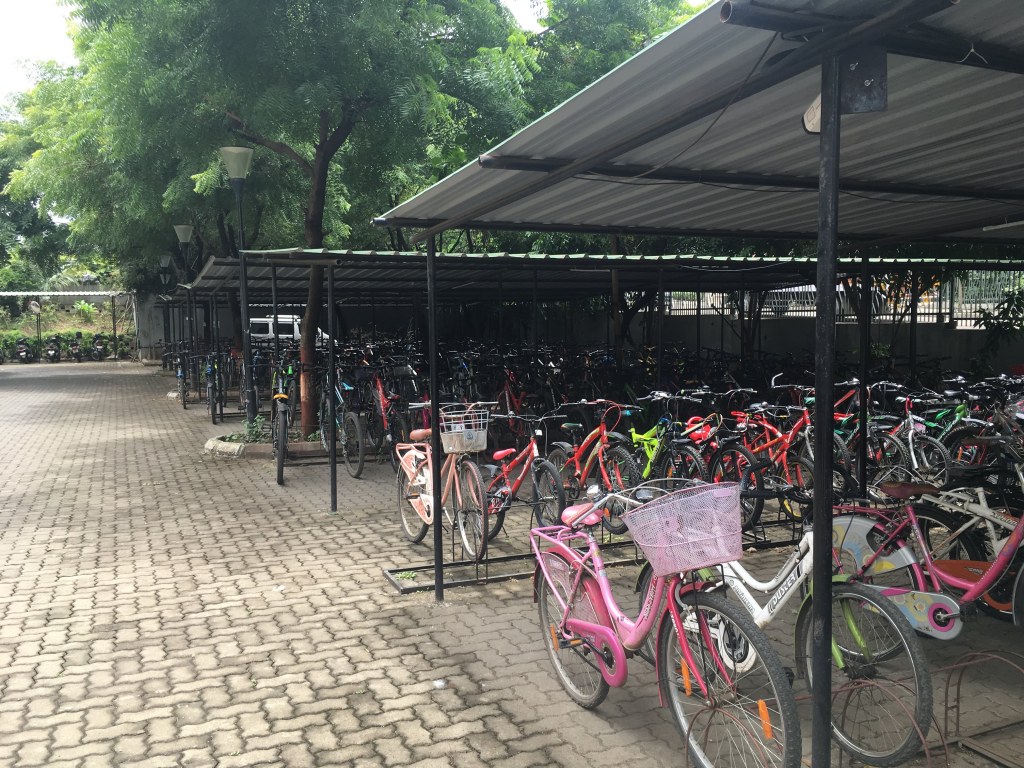
Many students bike to school! 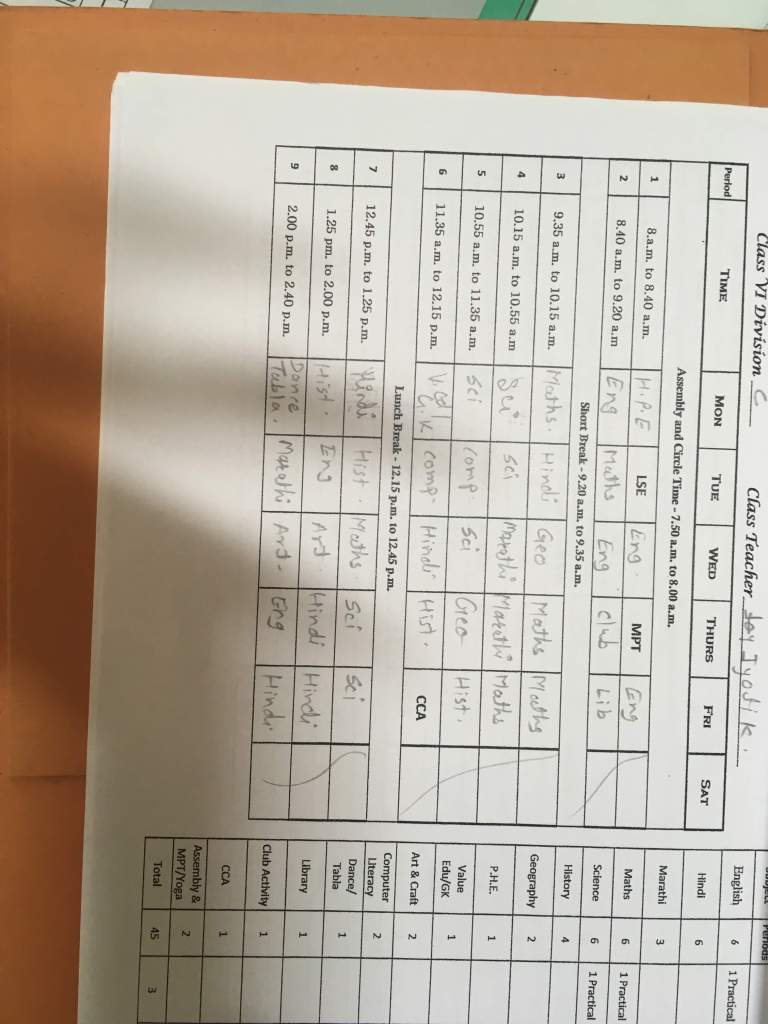
Alex’s daily schedule 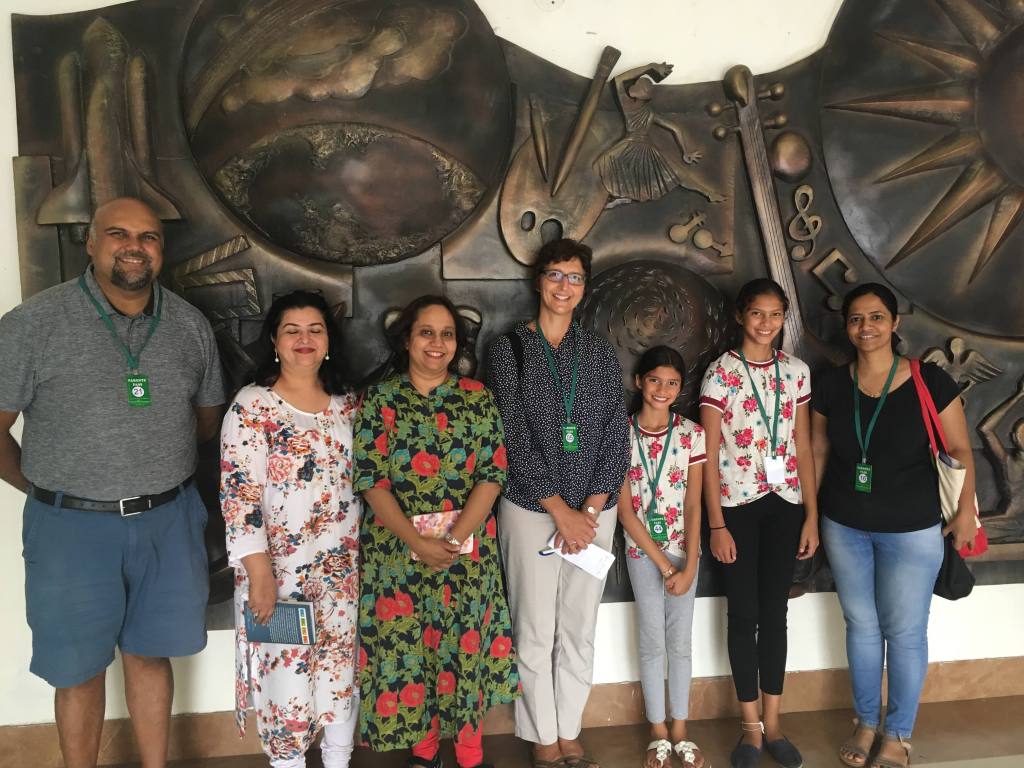
Some of the school staff as well as my cousin Shilpa (on the right) 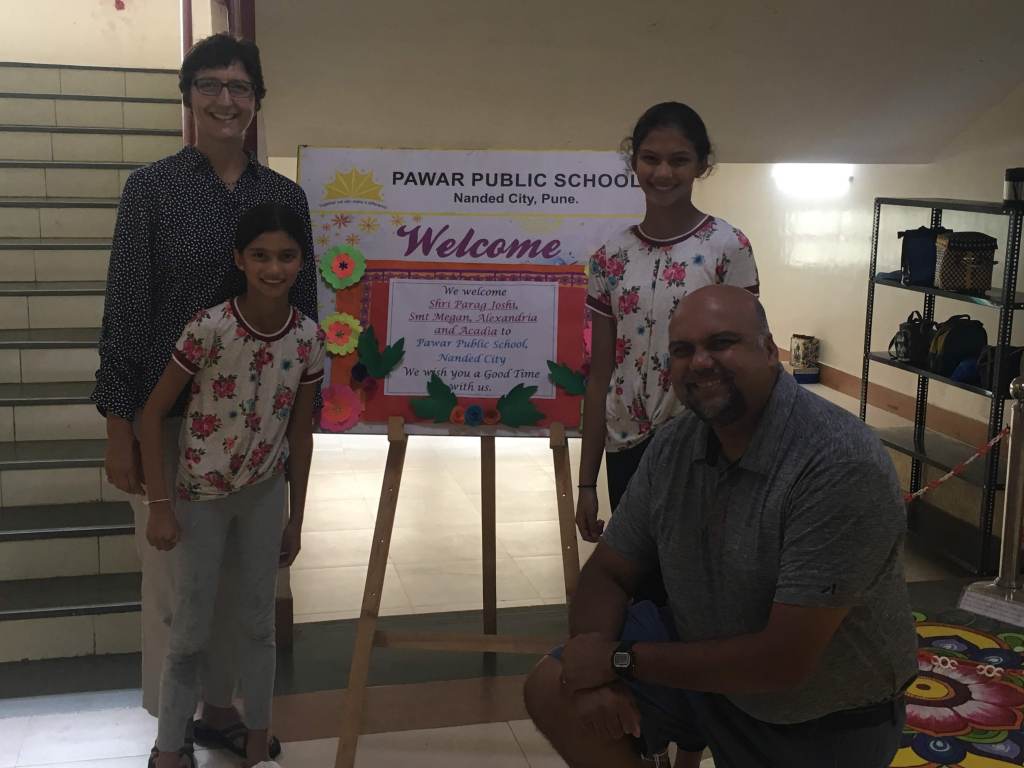
What me us when we had our school orientation
I would think that Americans would notice certain differences in schooling culture and practices in Indian schools. Here is a list of some of the differences:
- All students wear uniforms and students are expected to conform to hairstyle expectations as well. For girls, they must wear pigtails or braids if their hair is sufficiently long.
- Books and materials must be purchased by families and not supplied by the school. This includes art supplies.
- Teachers use the imperative form as their dominant form when speaking with students. So, rather than a more SEEMINGLY PASSIVE “Can you please take you seat”, you’re much more likely to hear, “Sit down!”
- Class sizes are commonly between 30 and 45 per class.
- Students do not move classes between periods, teachers do. Thus, each class of students is together for the day. Students take their lunch in the classrooms as well, mostly from lunches packed from home.
- Teachers are expected to maintain an emotional distance from their students. They would never wish to befriend students or talk to them about their personal lives very much. This is partly a function of the larger class sizes but also a part of the formal culture of Indian schools.
- Many students, if their families can afford to do so, and especially in the higher grades, attend cram classes in which students go for 2-3 hours after school to get help and more practice.
- While there is physical education class, there are no sports teams or sports leagues in school.
- No phones are allowed to even be brought to school by students and school staff may not use their phones at any time in the school day.
Taken together, this makes school a more formal, more distant, more academic, and more British experience. Formal schools in India were modeled after English schools during British rule. Schools do not seem to exist to cater to what we might call in the U.S., “the whole child”. Rather, the non-academic dimensions of students’ development is seen as a family or community responsibility rather than a school one. To re-purpose an old Calvin Coolidge expression, “the purpose of school is schooling.”
So, having discussed some differences among schools in the U.S. and India, I want discuss the range of schooling WITHIN India. Like anywhere else, schools in any place are both a reflection and a cause of the wider culture in which it exists.
Given its history, given the nature of the caste system (which continues to exist, especially in rural India), and given the vast economic inequality of the society, Indian schools vary tremendously in terms of resources, orientation, and teaching quality. The big split is between government-funded schools and private schools. Unlike the U.S. context, where only about 10% of students attend private schools, 35% of students in India attend private schools. It is not a random 35%. Students who attend private schools are much more likely to come from middle and upper-middle class families. These schools are almost all English-medium, which means that the language of instruction in school is English. Families see English-medium schools as supplying an essential ingredient in a globalized economy: English fluency. These are the families that have relatives in the U.S. or other parts of the West, that live in cities, that come from higher castes, that work in higher-income fields such as IT or engineering, and that are grasping the opportunities of the “New India”.
The remaining 65%, more rural and more poor and much more likely to be from lower castes. Their schools are much more likely to have less-qualified teachers, inferior construction, and have the language of instruction be a local language. It may surprise you to learn that India has over 28 major languages. Students in these school have lower school attainment, meaning they don’t stay as long in school compared to their private school counterparts. As is the case for many poorer families, the opportunity cost of going to school goes up as children age since by going to school they are foregoing income they might have earned. That schooling would be an investment toward greater overall lifetime earnings may well be understood but the needs of today outweigh the benefits of tomorrow.
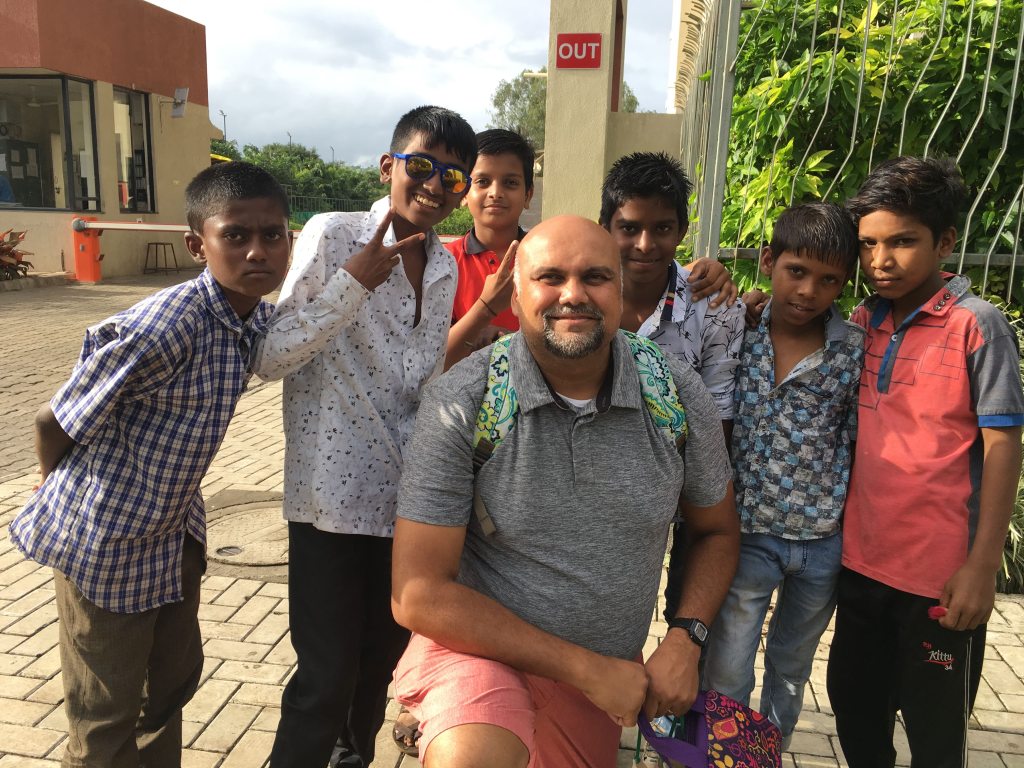
The students in this photo go to a local government-funded school and needed to walk six miles to get home from school after a bridge was washed out from flash floods. In my chance conversation with them, I learned that they seemed to think school was OK but largely because that is where they saw their friends and it was better than going to work. None of them knew anyone who lived in the U.S. but they were very interested in American pop culture, largely through watching Hollywood movies and TV shows.
“This seems quite unfair”, you might be thinking. Yes, it is. As in many societies including U.S. society, people live in stratas and the social networks of people is largely within their own socio-economic strata. This is merely magnified in India and schooling seems largely to be recreating theses strata of inequality rather than a countervailing force.
 Joshi-Staples Family India Adventure!