Hello friends! Megan has been doing ALL the rowing on this blog and now that she is in England for work, I thought it would be a good time for me to put in some work on the oars. So, it has been a month and a half into our little adventure and I’ve been asking myself the question that is the title of this post nearly every day that I have been here. The answer is “ish” – that’s the easy response. The trickier part is to figure out which elements of my core beliefs or general outlook, or just way of being in the world can be said to be the result of my early childhood growing up in India, and/or the result of my Indian parents raising me in the ways that they have. All very complicated. Certain things have been confirmed/reinforced in this trip about what I think makes me Indian:
-Comfort with Pluralism/Diversity: India is a cultural hodge-podge, both in the sense that there are thousands of distinct cultural communities that more than tolerate one another (except when they don’t), Every day, the air is filled with Muslim calls-to-prayer, Hindu prayer bells, the sounds of numerous languages that I can discern, farmers walking with their goatherds blocking a BMW from speeding on the roads, celebrations of regional holidays that are now celebrated around India, and of course the mind-boggling time-space warp that is India. That is, to walk around India is to witness every time period from the ancient past to the modern present, bumping up next to one another as though they were time-astronauts who had decided to join one another for a convention.
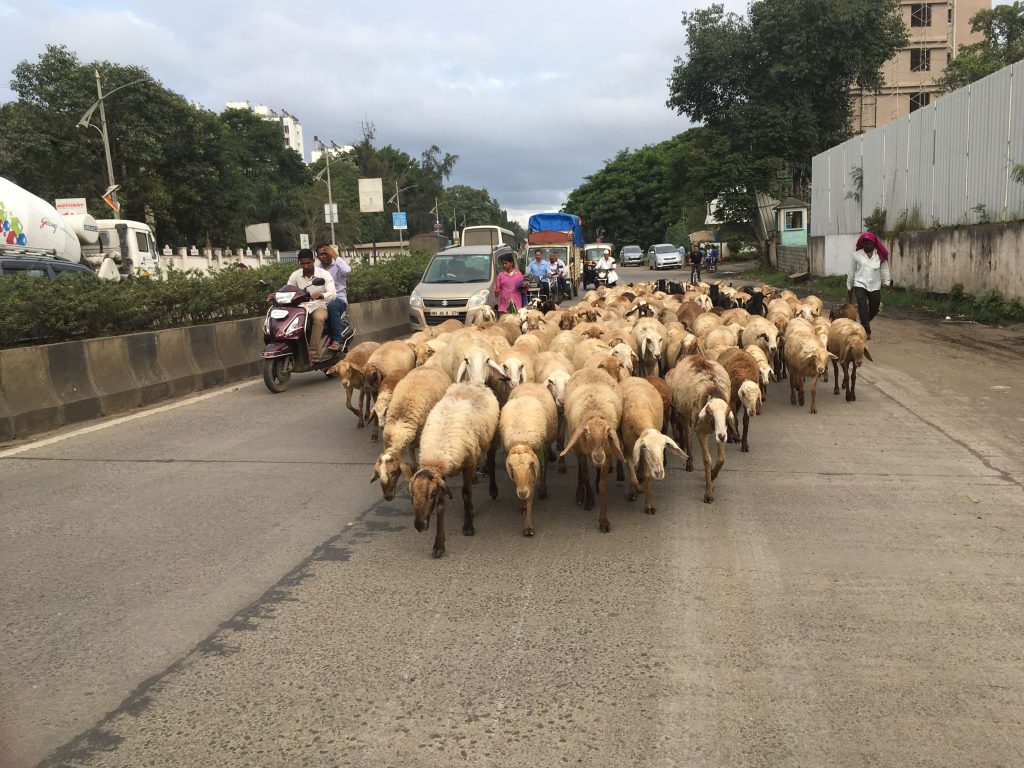
-People are more important than rules – In India, this is both a blessing and a curse. It is a blessing in that people seem to spontaneously problem-solve and help one another out (including clueless tourists such as ourselves) when they need help. It is expected that if you can help your fellow human in the moment, you should. I watched a merchant in a bazaar helping one one of my daughters haggle with him over the price! In India, people refer to each other, even when they are strangers, as “auntie”, “uncle”, “grandfather”, and other familial terms when they call for each other’s attention. The downside is that if rules are not the guideposts, then corruption is easier and in India, there is a great deal of it from the petty corruption of clerks to the much more consequential corruption of political parties and the public sector at large. Interestingly, I think we do have a kind of corruption on the grand scale in the U.S. (lobbying, political contributions, tax code loopholes, etc.) but very little in everyday life.
This warmth and friendliness in the culture is something I hope I have taken and believe I have for the most part. It has helped me be friendly toward strangers and be creative in solving problems in the classroom or between squabbling daughters.
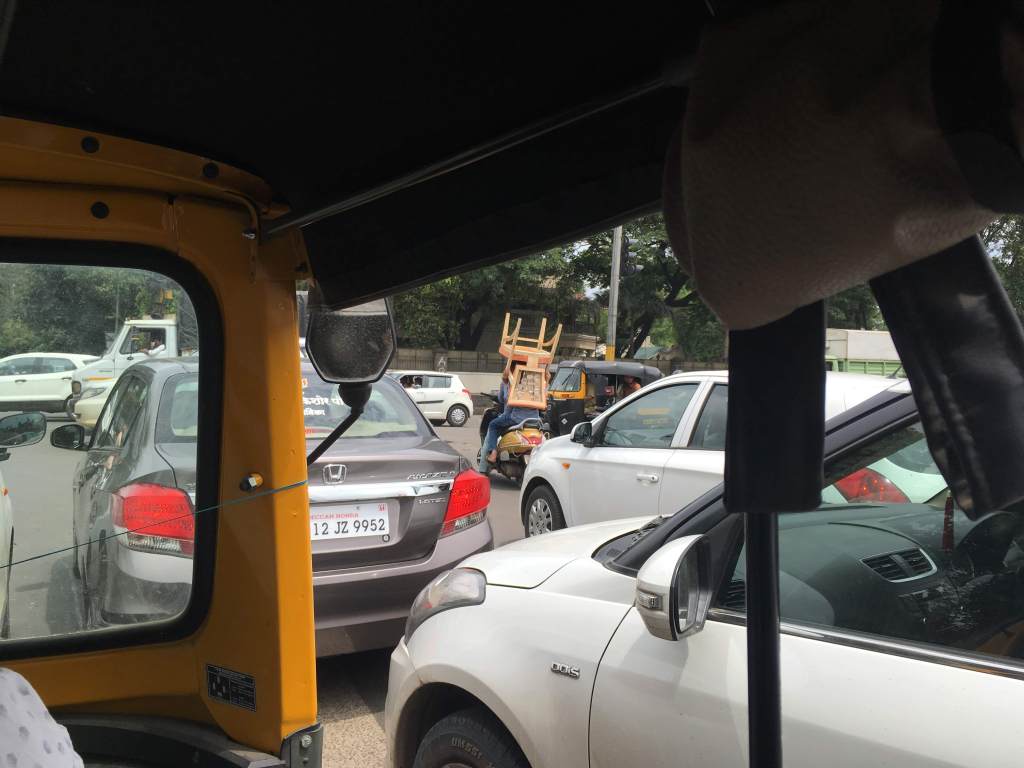
Without formal traffic rules, drivers must create a swarm mentality to quickly create rules in the moment.
-Taking the long view. The land that is today called India has been settled and lived in by humans for at least 5000 years. This is a civilization, not merely a country. There is so much evidence of layers and layers of history around every corner. I think that knowing and connecting with this deep history has helped to ground me as I was making sense of America and of my place in it. The long, varied, and complex history of India offered a backstop to feelings of self-doubt and isolation that I remember feeling as an early teen. I was someone with value because I was the product of a culture that was rich in heritage and history.
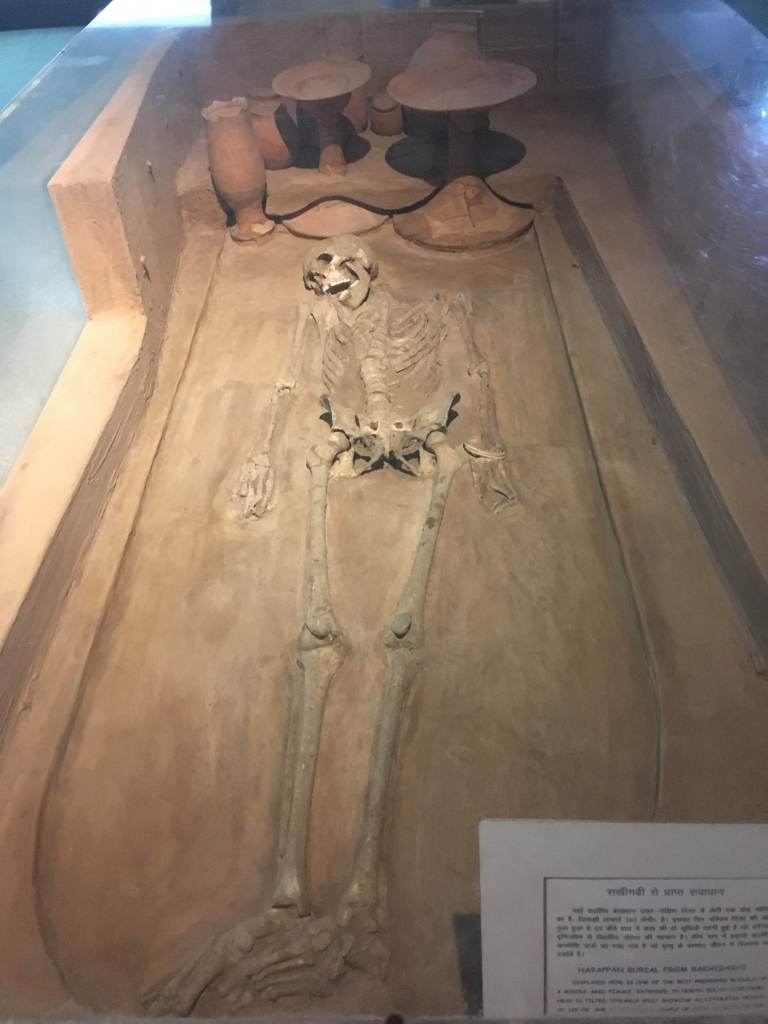
The above photo shows a grave from the ancient Indus River Valley city of Harappa, 2600 BCE. Notice that this female skeleton is wearing a bangle on her left hand, not too dissimilar to ones on sale in any market in India today!
 Joshi-Staples Family India Adventure!